


We’ve all admired the elegant lines and rich tones of a piano. But have you ever wondered what truly goes on inside that beautiful cabinet to produce such captivating music? Beyond the polished wood and ivory (or synthetic) keys lies a marvel of engineering – a complex and interconnected system of thousands of parts working in harmony. At Burd & Sons, we get to delve into this hidden world every day. Let’s take a peek!
More Than Just Keys: The Three Main Systems
While a piano may seem like a simple instrument, it’s actually comprised of three major mechanical systems that must work together flawlessly:
- The Keyboard: This is where the magic begins for the player. Each key is a lever. When you press it, you’re not directly hitting a string. Instead, you’re setting in motion a carefully orchestrated chain reaction within the action.
- The Action: This is arguably the most intricate part of the piano. For every single key (that’s 88 on a standard piano!), there’s a corresponding set of levers, hammers, and dampers.
- Levers and Whips: As you press a key, a series of levers (the “key lever,” “wippen,” and “jack”) are activated. The “jack” is particularly clever, designed to quickly escape from under the hammer butt, allowing the hammer to fly freely towards the string.
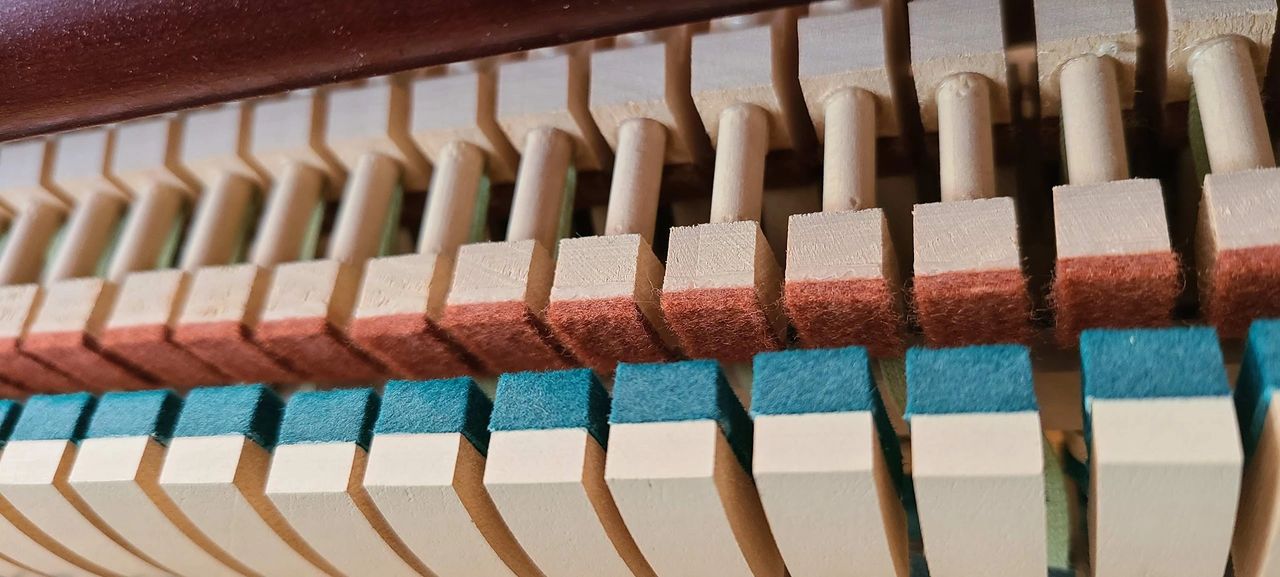
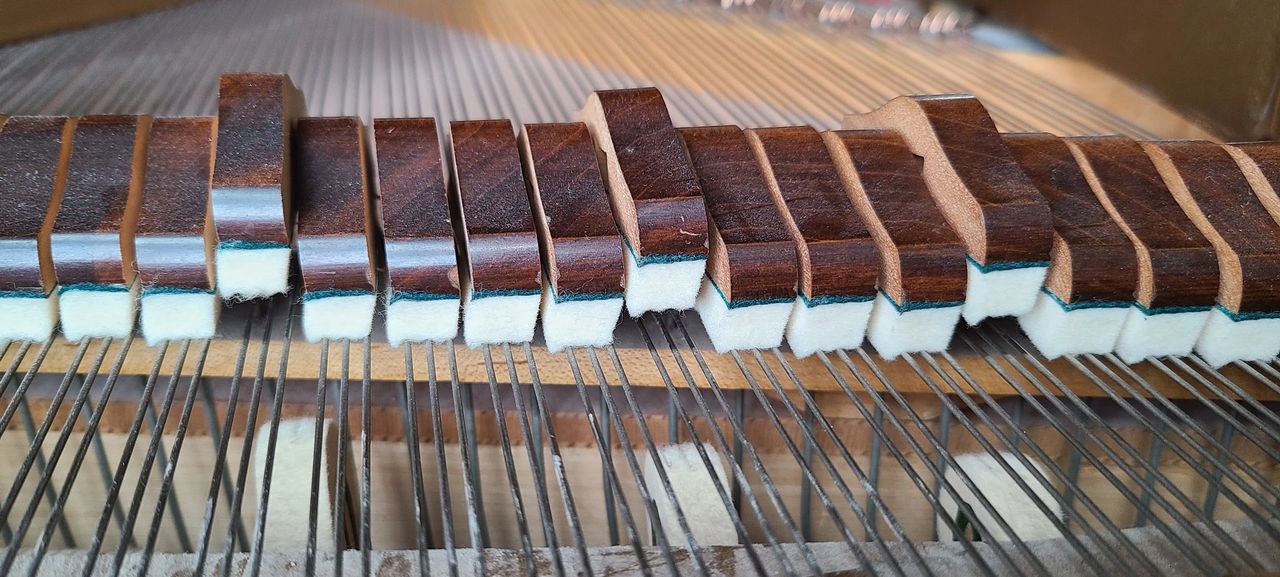
- Hammers: These felt-covered mallets are propelled upwards to strike the strings. The type of felt, the shape of the hammer, and its “voicing” (how it’s shaped and treated) all significantly impact the piano’s tone.
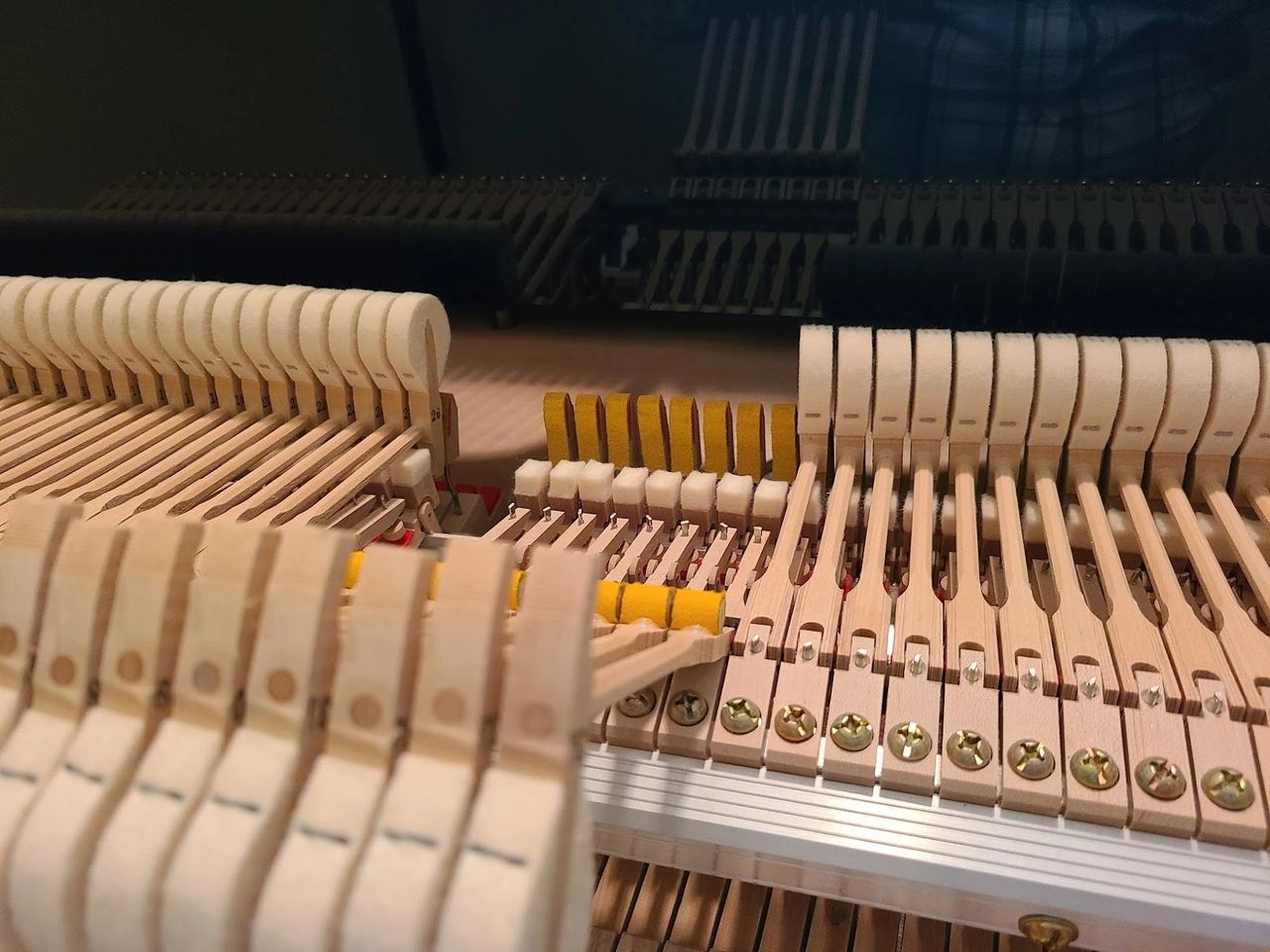
- Dampers: Crucial for controlling sustain, dampers are felt pads that rest on the strings. As a key is pressed, its corresponding damper lifts, allowing the string to vibrate. When you release the key, the damper falls back onto the string, stopping the sound. The sustain pedal lifts all the dampers simultaneously.
- The Soundboard and Strings: This is the heart of the piano’s acoustic power.
- Strings: A modern piano has around 230 individual strings, though some notes have multiple strings (usually two or three) tuned in unison to create a richer, louder sound. These strings are under enormous tension – often tens of thousands of pounds of pull! This tension is why regular tuning is so vital.
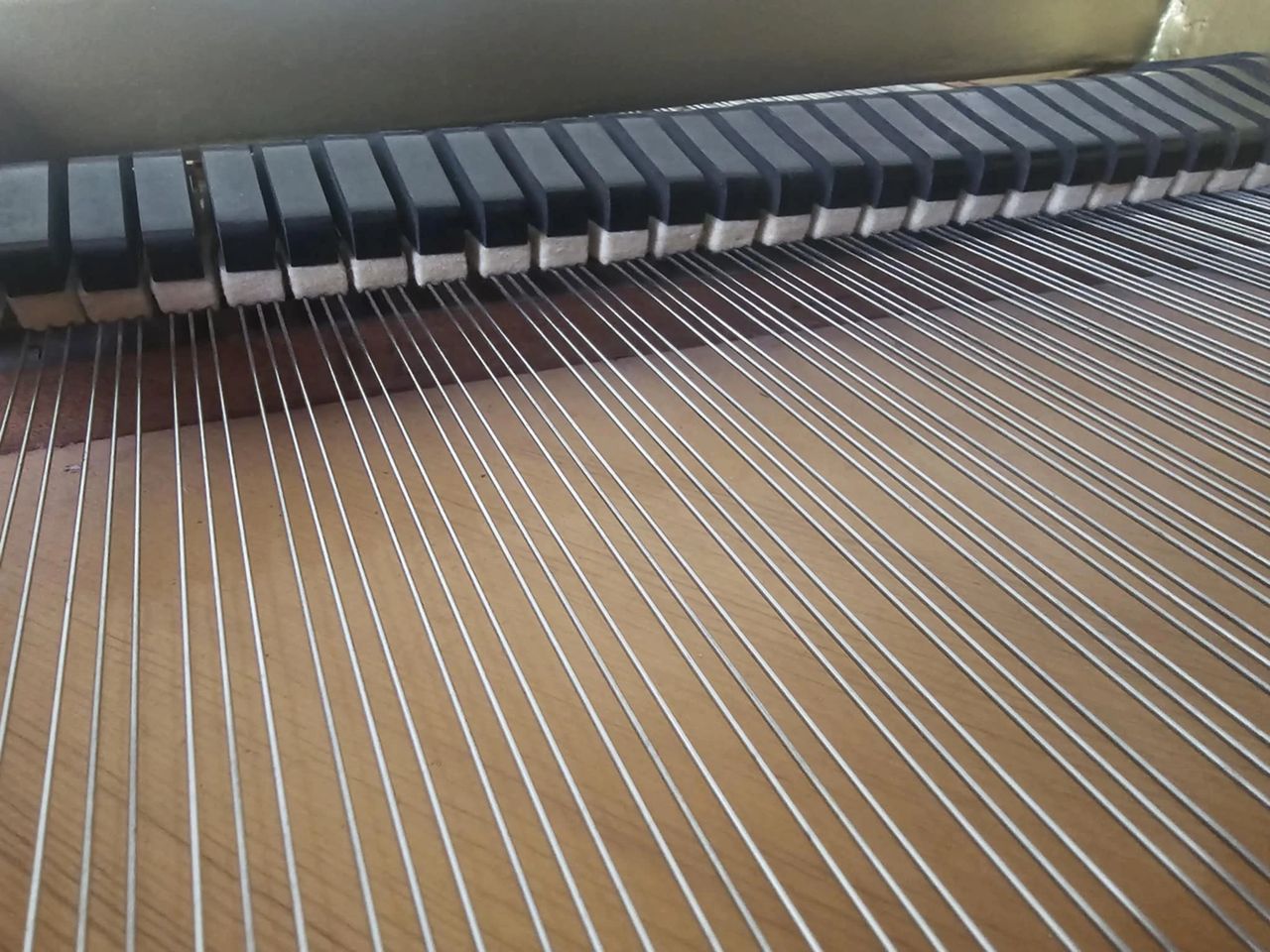
- Bridges: The strings pass over bridges (a treble bridge and a bass bridge), which transfer the string’s vibrations to the soundboard.
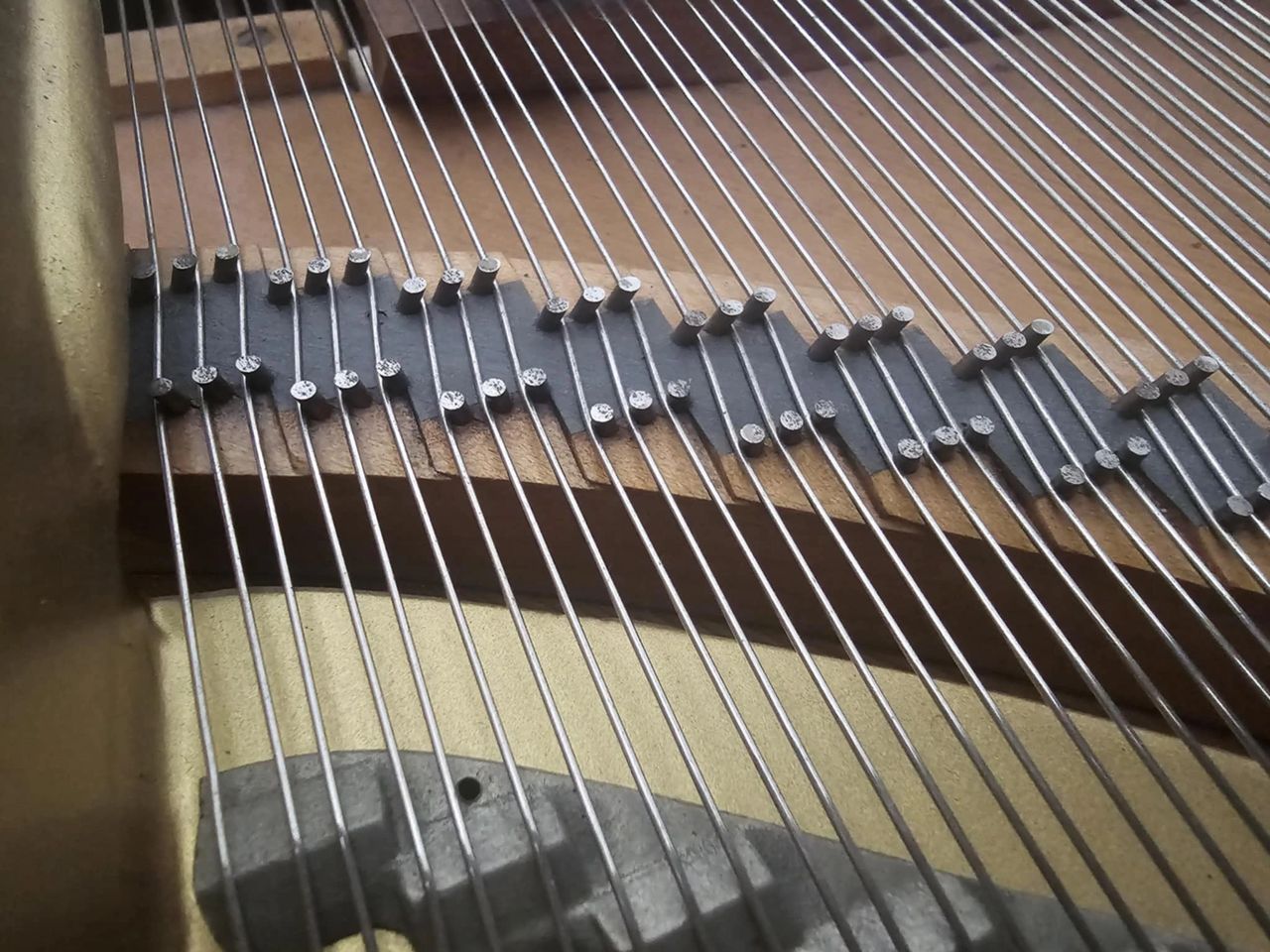
- Soundboard: This large, thin piece of spruce wood acts like an amplifier. It vibrates in sympathy with the strings, vastly increasing the volume and richness of the sound. Without the soundboard, the strings would barely be audible.
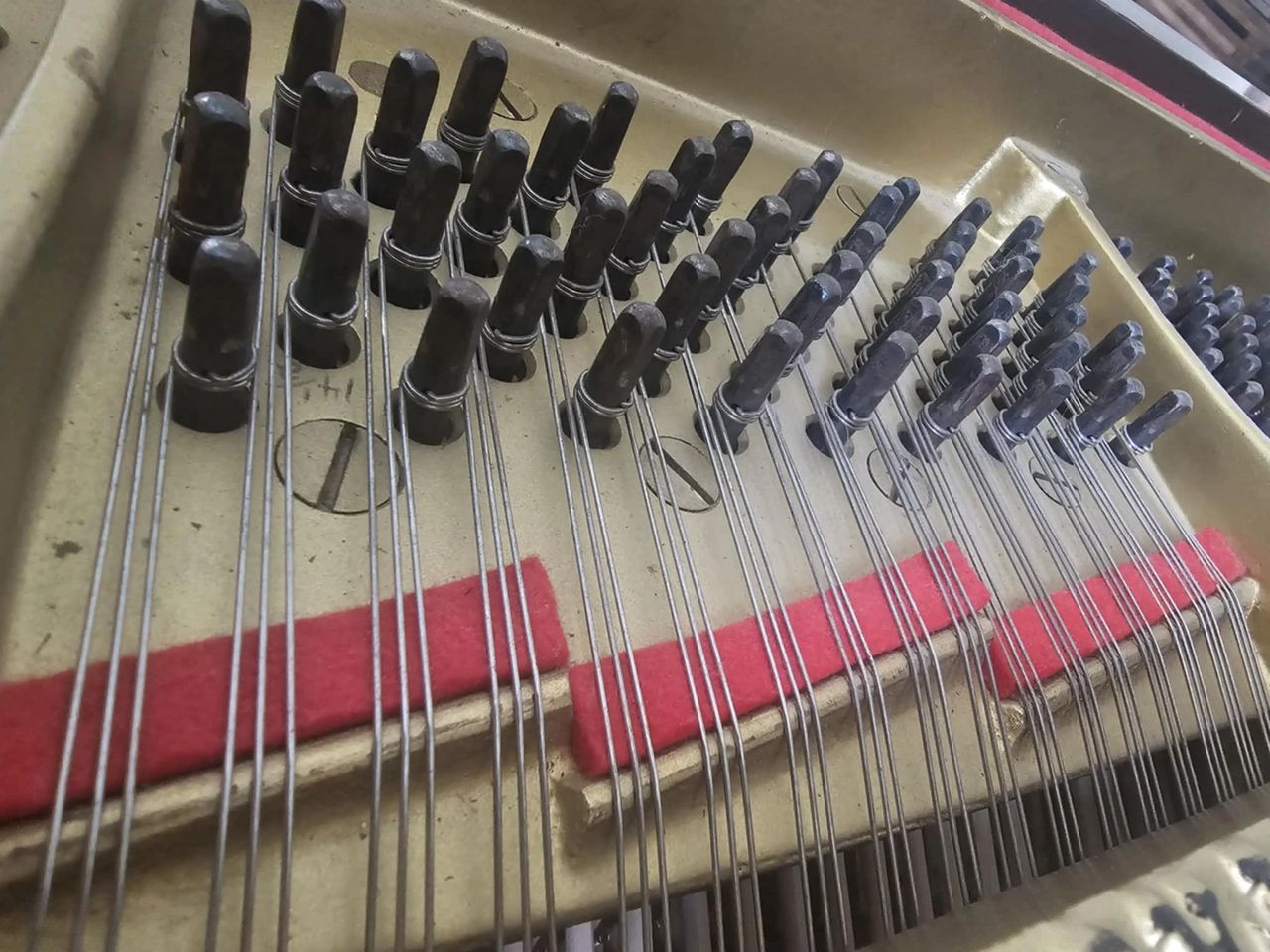
- Pinblock and Tuning Pins: The strings are anchored at one end and wrapped around tuning pins at the other. These pins are hammered into the “pinblock,” a very dense piece of wood designed to hold the pins tightly against the immense string tension. This stability is critical for a piano to hold its tune.
The Role of Your Piano Tuner
Understanding this hidden world gives you a new appreciation for the complexity of your instrument. It also highlights why professional care is so essential. When we tune your piano, we’re not just adjusting string tension. We’re also checking the myriad of moving parts within the action, ensuring they move freely and efficiently. We look for sticking keys, sluggish hammers, worn felts, and any number of small issues that, if left unaddressed, can impact your piano’s playability and tone.
Just like a finely tuned automobile, a piano needs regular maintenance to perform at its best. So, the next time you sit down to play, take a moment to marvel at the incredible, hidden world within your piano – a testament to centuries of craftsmanship and ingenuity, all working to create beautiful music for you.